ThinkQuant.AI is an adaptive learning environment for conceptually demanding STEM courses. It uses diagnostic evidence to identify students' starting points across key knowledge areas, provides adaptive support based on readiness and learning progress, and integrates an AI tutor that offers scaffolded guidance rather than direct answers.
Students may enter with different levels of preparation in core areas such as conceptual reasoning, mathematical representation, or prerequisite knowledge.
→ ThinkQuant.AI uses diagnostic evidence to identify readiness and guide support.When students rely on generic chatbots for direct answers, instructors may have less visibility into student reasoning, confusion, and misconceptions.
→ ThinkQuant.AI channels AI use toward scaffolded guidance rather than answer delivery.Grades alone may reveal difficulty too late. Earlier signals can help instructors identify where students need review, feedback, or human support.
→ ThinkQuant.AI provides early, aggregated signals about where students need support.Six integrated components use learner data to provide adaptive support, scaffolded guidance, human assistance, and learning analytics.
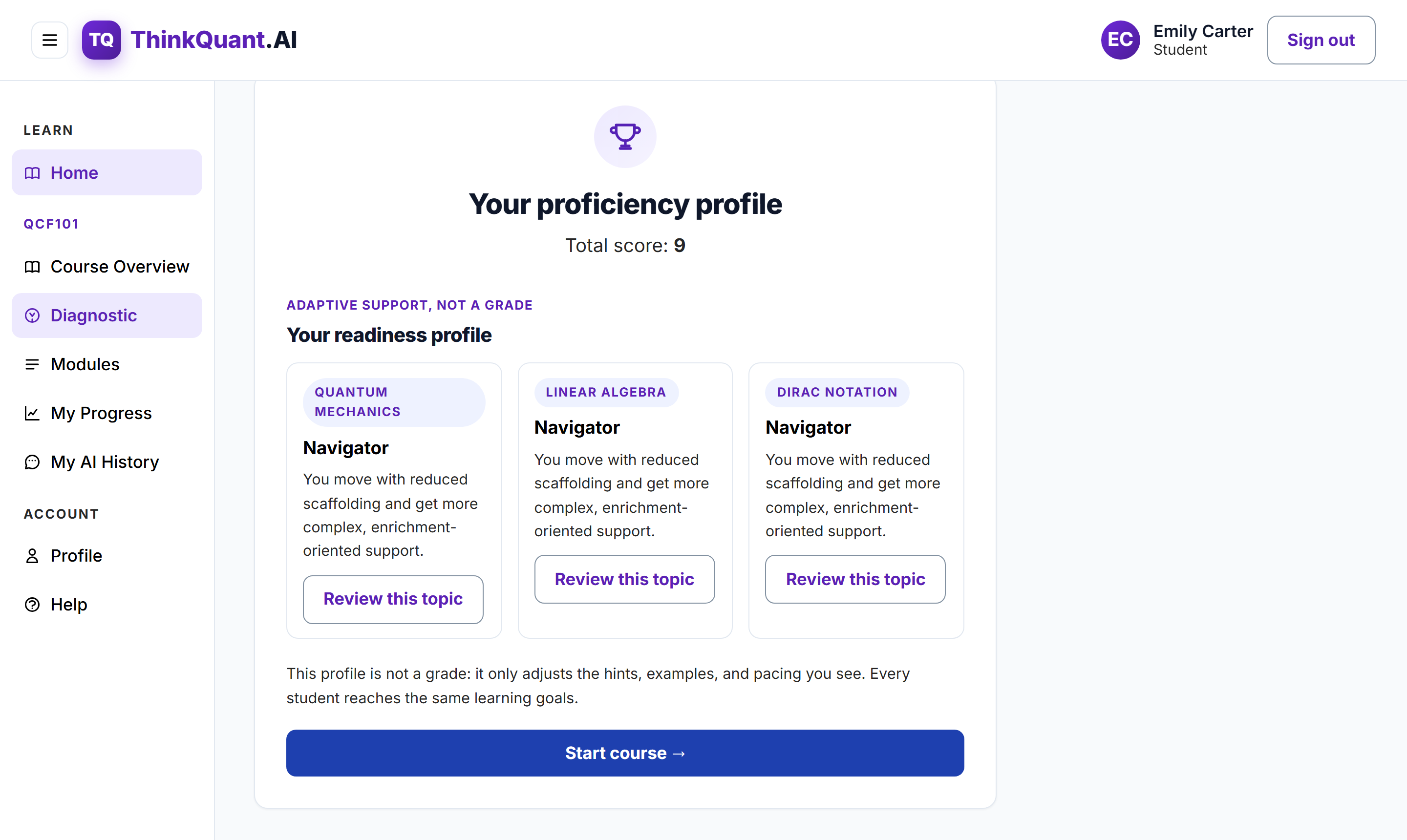
A diagnostic test identifies readiness by thematic axis and assigns an Explorer, Builder, or Navigator profile. These profiles guide support and review; they are not grades.
The AI tutor uses guiding questions, scaffolded hints, and course-aligned support to help students explain and refine their reasoning. Instructors configure its guidance by course, lesson, quiz, or assessment context.
When students do not meet the mastery threshold, feedback is adjusted to their readiness profile. Students can review, seek support, and try again.
Each module ends with an interactive assessment in which students explain or revise their reasoning with scaffolded tutor support. The instructor makes the final evaluation decision.
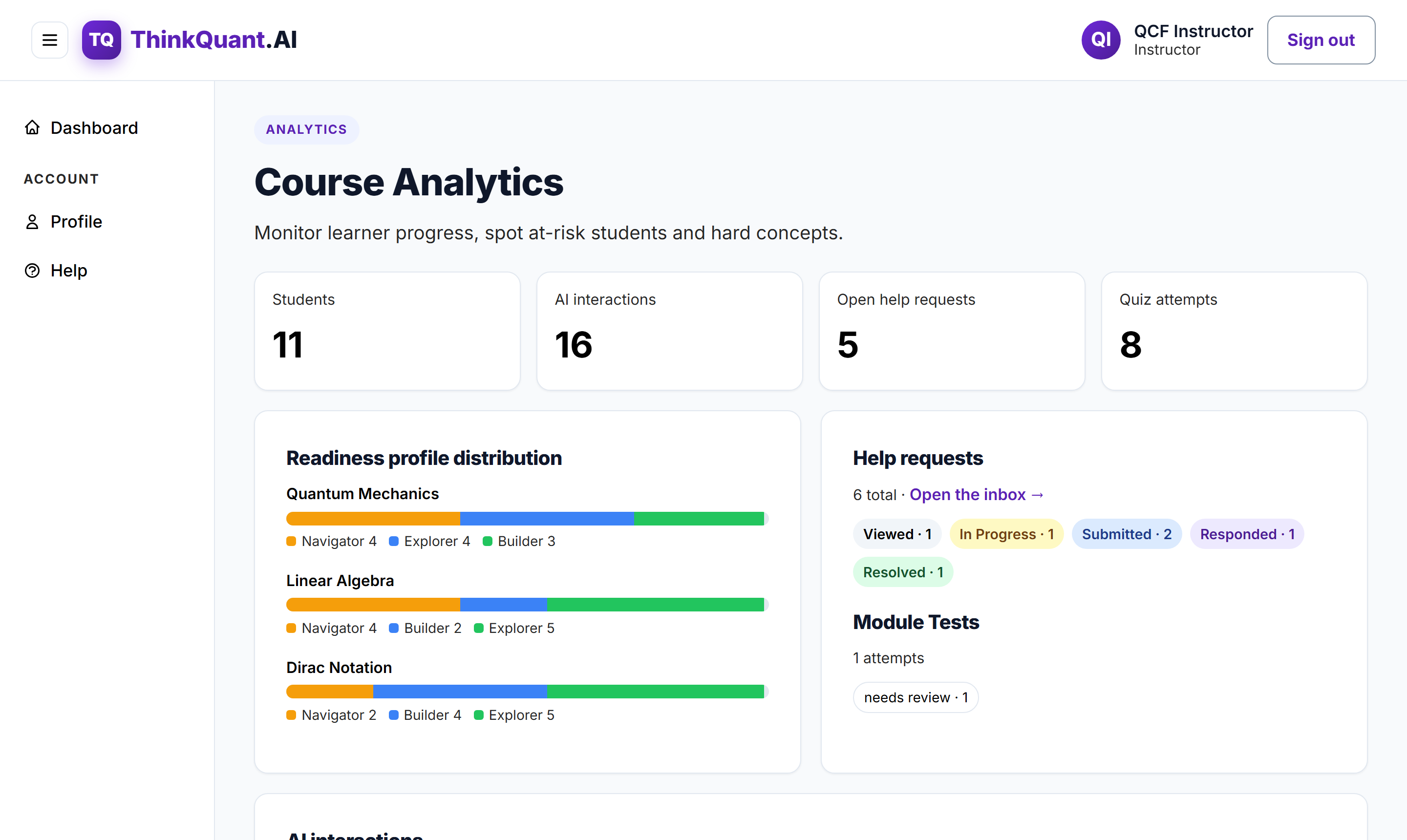
The platform displays readiness distributions, mastery patterns, tutor use, and help requests. Tutor transcripts remain private, while question themes are reported in anonymized, aggregated form.
Students can request help from a lesson, quiz, or module assessment. Each request includes relevant learning context so the instructor or TA can respond more effectively.
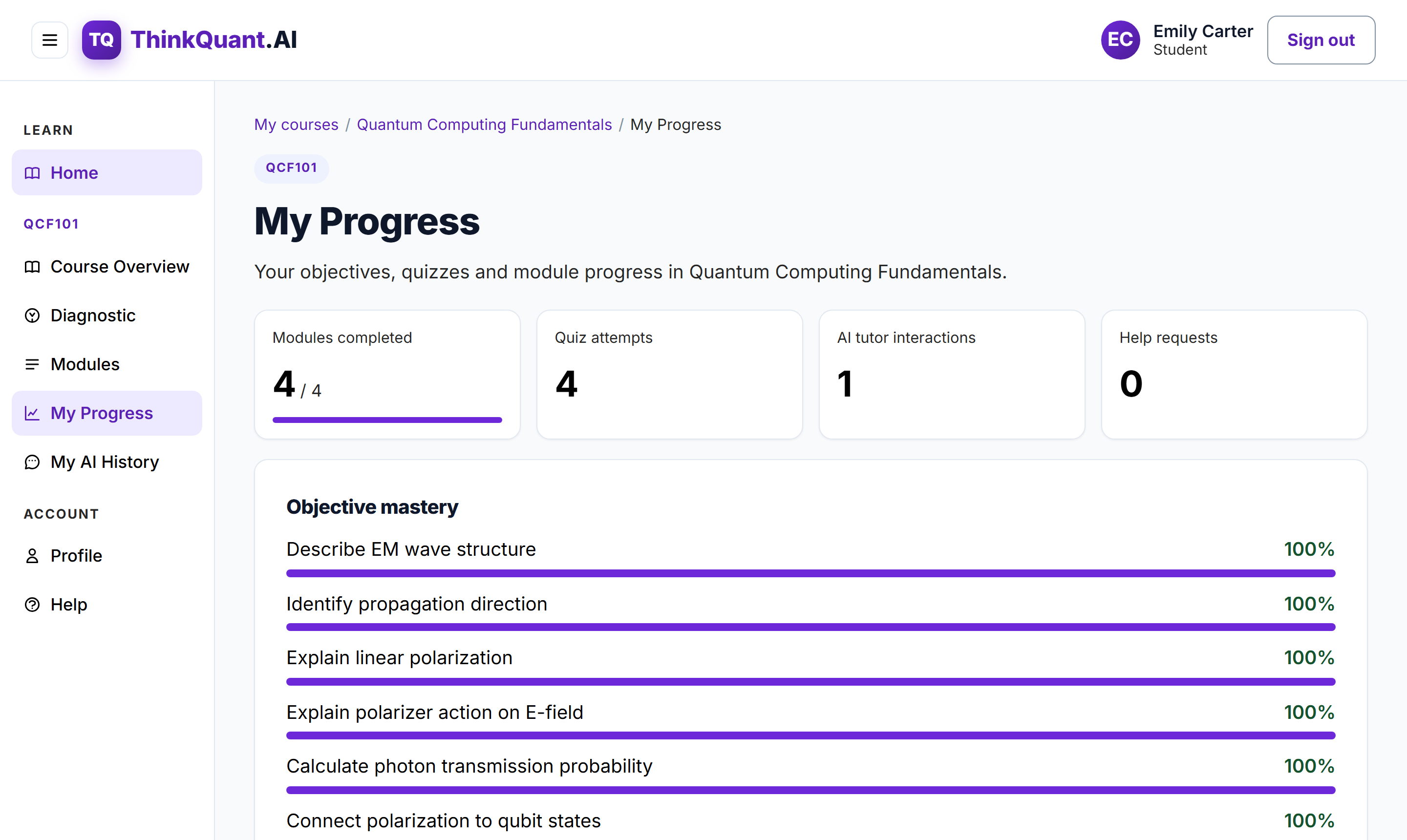
Students move from diagnostic-based readiness profiles into structured modules with learning objectives, interactive activities, and mastery-based quizzes.
Students receive an Explorer, Builder, or Navigator readiness profile for each thematic axis. These profiles guide support and review materials; they are not grades.
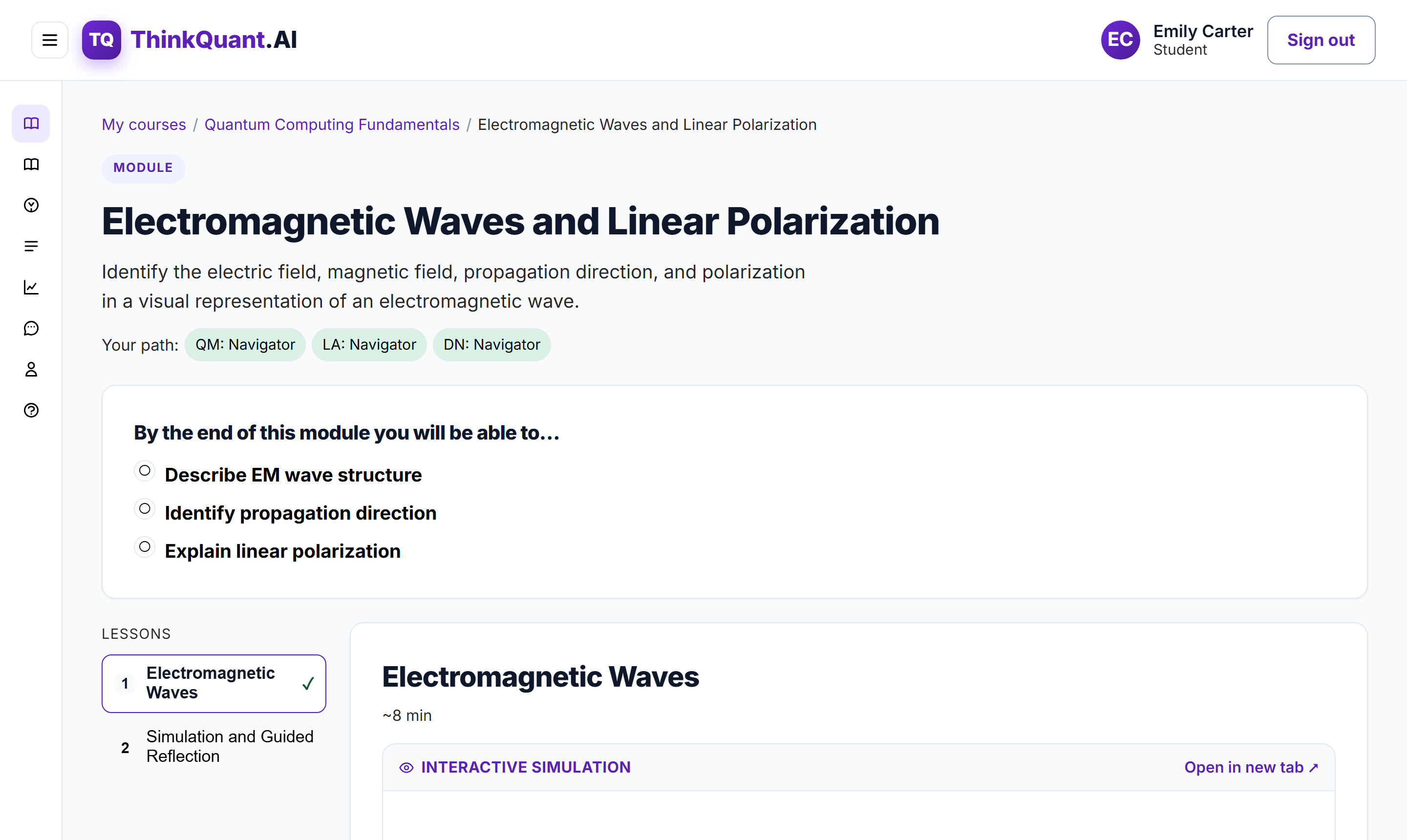
Within each module, students move through learning objectives, short lessons, interactive activities, and mastery-based quizzes, with adaptive feedback available when needed.
The student journey connects diagnostic evidence, readiness profiles, learning activities, adaptive feedback, AI-supported scaffolding, and module-level assessment.
A short diagnostic test identifies each student's starting point across course-defined axes. The results guide support and are not used for grading.
Each axis receives an Explorer, Builder, or Navigator readiness profile that guides the level of review, feedback, and scaffolding the student receives.
Students work through short lessons, visual explanations, simulations, and interactive activities designed to support conceptual understanding.
Mastery-based quizzes check understanding. When students need support, they receive adaptive feedback, can review the material, and may use the AI tutor for guiding questions and scaffolded hints before trying again.
Each module ends with an interactive assessment in which students explain, justify, or revise their reasoning with scaffolded AI tutor support. The instructor makes the final evaluation decision before the student advances.
Instructors configure course content, diagnostic criteria, adaptive feedback, AI tutor guidance, assessments, and learning analytics from one workspace.
ThinkQuant.AI protects student privacy and academic integrity through platform design, role-based access, and clear boundaries for AI-supported activities.
Regular AI tutor conversations are private. Instructors, TAs, and administrators see only interaction counts and anonymized themes. The exception is the Module Test, which is clearly identified as assessment evidence before students begin.
Correct answers, rubrics, and evaluation criteria are protected from the student-facing interface. Students receive guidance and feedback without exposing assessment keys.
Readiness profiles adjust review materials, hints, and pacing. They are not grades, do not appear in the gradebook, and are presented as support profiles rather than labels.
See how diagnostic profiles, adaptive feedback, AI tutor support, and analytics work together in a course demo.